# How we provide reliability
The biggest issue with trade plugins is dupe bugs
We understood this difficulty and I started working on the plugin keeping in mind that\
it should've been designed to have as little as possible ways to produce instabilities
### We adopted 2 measures to counteract dupes:
1. Trade is divided into 4 statuses/phases: **REFUSED**, **CONFIRMED**, **COMPLETED** and **RETRIEVED**\
Those 4 phases lock the player and the trade items to prevent duping by clicking, double-clicking, drag-clicking, and all the things
2. I'm using a plugin to test ZelTrade under stress conditions and on particular cases. The code of **TradeIntegrity** will be open source and released soon, so you can download it and test ZelTrade by yourself
#### ZelTrade is robust, efficiently managing disruptions to the Redis cache connection. It can also withstand server crashes, utilizing a query system to monitor all active trades within the network.
## Our testing suite
My testing suite
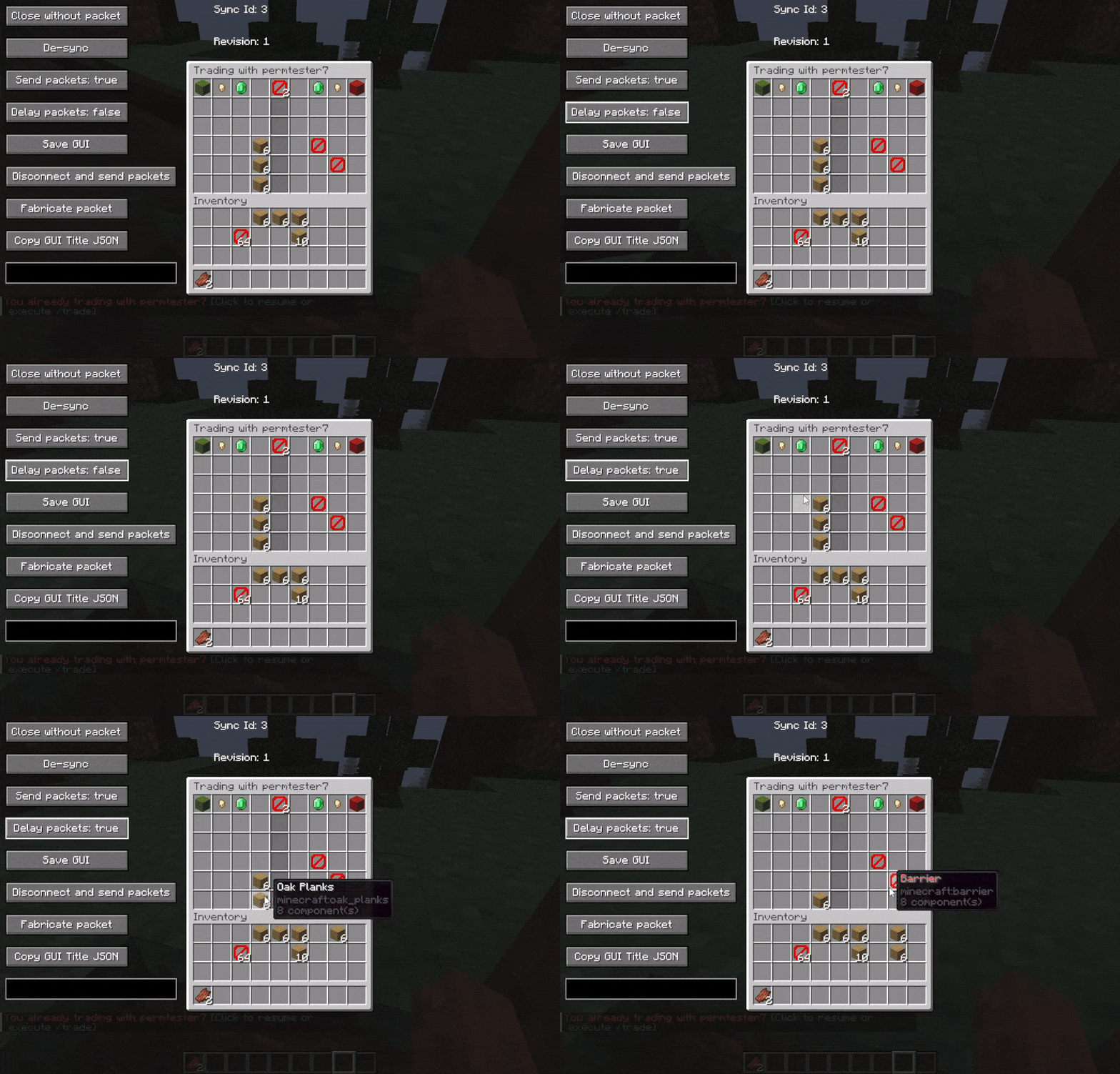
* I start with a **testing modpack** to thoroughly test each GUI feature, identifying any bugs related to item desynchronization
* The second tool is a stress test command that makes the server lag randomly
* When I test, I choose MySQL and Redis servers with **latency greater than 200ms** to amplify desynchronization issues
* Additionally i attach a debugger to the server instance to check if there is any leftover inside hashmaps and to check if there is any possible memory leak